%20%26%20How%20They%20Work.png?alt=media&token=f317fe7d-7cbe-43f3-b710-77b9d7e0a876)
Solar Power Components Explained (Panels, Inverter, Controller, Battery) & How They Work
Almost everybody knows about solar energy systems, but not everybody knows about the major components and how each of them interacts and works with the others to produce electricity. At the end of this beginner's guide, you will know everything about how solar power works, how the energy system is basically set up, and what each of the solar energy components - solar panels, inverter, batteries, and solar charge controller does.
Solar Panels: How They Work, Types, Designs & Setup
In layman's terms, the solar panels are the flat silver/bluish/dark looking rectangular components of the solar energy system that you usually see mounted on rooftops. The function of the solar panels is to get solar energy from the sun's rays and send it down to a hybrid inverter or solar charge controller through a DC cable. The current being transmitted here is Direct Current (DC).
Solar panels come in various sizes (see guide on solar panel sizing), which reflects the maximum amount of electrical current they can produce. The number of solar panels that will be needed for a user depends on various factors such as the user's load or energy requirement, backup period and hours, average hours of good sunshine per day, roof inclination, overall size of the system, etc.
Not every solar panel is the same. Aside from size, solar panels come in various technologies such as the all-back design and half-cut design for anti-shading and obstructions, as well as cell technology, which alone greatly affects performance.
Two major types of solar panels are the monocrystalline and the polycrystalline, and they are also referred to as mono or poly, respectively. Mono panels are made from a single sheet of silicon. They are more efficient in converting sunlight to energy and perform well in very hot temperatures. The downside being that they are relatively more expensive.
Poly solar panels are made from pieces of silicon that are then melted together. They are more bluish in colour and not as uniform as mono panels. They are less efficient and might drop slightly more than a mono panel in very hot weather, but are cheaper to buy.
Solar panels can also be monofacial or bifacial. Monofacial solar panels have only one side made of glass, through which they can get sunlight. Bifacials have both sides as glass, through which it gets sunlight. However, the rear side of bifacial solar panels is not usually as efficient in design as the front side.
To get the best from bifacial solar panels, which are more expensive than monofacials, they must be installed differently. The panels must have good clearance from a reflective or light coloured ground. The best is on a tilted angle with the lower end of the panel about 3 to 5 feet up from the ground. If they are laid out flat against a solid surface like on a residential rooftop, they will work just like a monofacial panel.
Inverters: Functions, Types, Modes
An inverter is the electronic device that stays inside the premises of a solar energy system whose function is to charge the batteries with the DC current gotten through the cables from the solar panels and also charge the batteries with electricity from the grid or external generator.
The inverter also converts the DC current from the solar panels or from the batteries to the usable alternating current required by your home appliances. The inverter is that component of the solar energy system that does the fast automatic switching between the grid and the battery within 10 milliseconds (ms) during power failures, such that your TV does not go off.
Inverters can either be hybrid or non-hybrid. Hybrid inverters have inbuilt solar charge controllers which it uses to convert DC power from the solar panels. Depending on the model, they can intelligently combine solar energy with energy from the battery or power from the grid for use in real time, and users can switch between various solar-battery-grid priority modes. This type of inverter is best for not only providing backup power in the event of a power failure, but also for reducing electricity bills.
Non-hybrid inverters do not have a solar charge controller built inside them. Hence, they cannot work or charge with solar panels and sunlight, and must need an external solar charge controller to do that for them.
While hybrid inverters might cost the same or be comparatively cheaper than nonhybrid inverters plus an MPPT solar charge controller, users can be left stranded without power if there is a fault with the inverter's built-in solar charging component, as the inverter itself will need to be taken out for repair.
Whereas, if an external solar charge controller working with a non-hybrid inverter becomes faulty, the user can still enjoy power backup as only the controller will be removed, while the non-hybrid inverter continues to work with the grid and provide backup from the battery.
Inverters can also be transformer-based or transformerless based, which are also known as high-frequency or high-voltage inverters. Transformer-based inverters make use of heavy copper for energy conversion. They are heavier, less efficient, but highly durable and can better withstand surges.
Transformerless and high-frequency or high-voltage inverters are much lighter in weight because they do not have heavy-duty copper components. They make use of advanced electronics for energy conversion. They are more efficient but less durable in handling surges and other electrical issues. See this guide for a detailed comparison between these two types of inverters.
Inverters are like the brain box of a solar energy system, which users interact with. Besides charging and output mode settings, modern and advanced inverters have sophisticated functions such as netmetering to sell excess solar to the grid, battery mode settings, battery longevity function such as equalization, dual AC output, battery cutoff level, etc.
Solar Charge Controllers: Types, When They're Needed & Functions You Didn't Know
This is the solar component that simply charges the batteries using only the solar energy gotten from the solar panels. It is needed in solar energy systems where a hybrid inverter is not used.
The solar panels must be connected via a DC cable to the PV input port of the external solar charge controller. Another cable will then run from the PV output port of the controller to the battery. The solar charge controller in this system will be in charge of charging the batteries using the sun, as well as performing all other functions that relate to the sun.
Aside from giving out usable AC as output, Solar charge controllers also perform a lot of battery-related charging functions, just like the inverter. Depending on the make and model, users can configure battery types, charging currents, float, cutoff, and even perform equalization functions directly from the sun. They can also have a DC load output port for powering DC appliances directly.
There are two types of solar charge controllers - PWM (Pulse Width Modulation) or MPPT (Maximum Power Point Tracking) controllers. PWM does a basic form of conversion by matching the panel voltage with the battery's voltage, thereby wasting a lot of solar energy.
MPPT controllers are much more efficient in energy conversion and accommodate higher panel voltages. While PWM controllers are best for very small solar applications, MPPT is highly recommended for medium systems and above, but they are substantially more expensive.
Batteries: Types & Prevalence
This is the energy reservoir of a solar power system. It is the component of the solar setup that stores electricity gotten from either the sun through the solar panels or from the grid, from the inverter. It stores this energy until it is required by the inverter in the event of a power failure.
There are 3 major types of solar inverter batteries;
1. The dry cell sealed maintenance-free batteries (AGM and Gel).
2. Wet/water/flooded batteries, known as tubular batteries, which are not maintenance-free (see our top 5 tubular batteries).
3. Lithium batteries.
For a very detailed comparison between tubular batteries and lithium batteries, check this guide.
Dry cell batteries were the traditionally used type that reigned with transformer-based non-hybrid inverters. Tubular batteries witnessed the transition from transformer inverters to hybrid transformerless and high frequency/high voltage inverters, while lithium batteries are the modern types of solar and inverter batteries, which are mostly being used with advanced hybrid transformer or transformerless inverters for new installations. Lithium batteries also have an electronic component that functions as its own brainbox called the Battery Management System (BMS).
Going for lithium batteries; do well to read this guide about troubleshooting common lithium battery BMS and inverter communication failures, and also carefully go through this to ensure that your chosen installer installs your lithium battery perfectly, so it doesn't drain fast and permanently die off quicker than expected.
Related Articles
Causes Of Solar Panel Fires, Battery Explosions & Burning Inverters - Prevention & Safety Guide
There are cases of explosions and fire outbreaks due to solar power installations. Despite the exponentially number of solar installations (about 0.2 ...
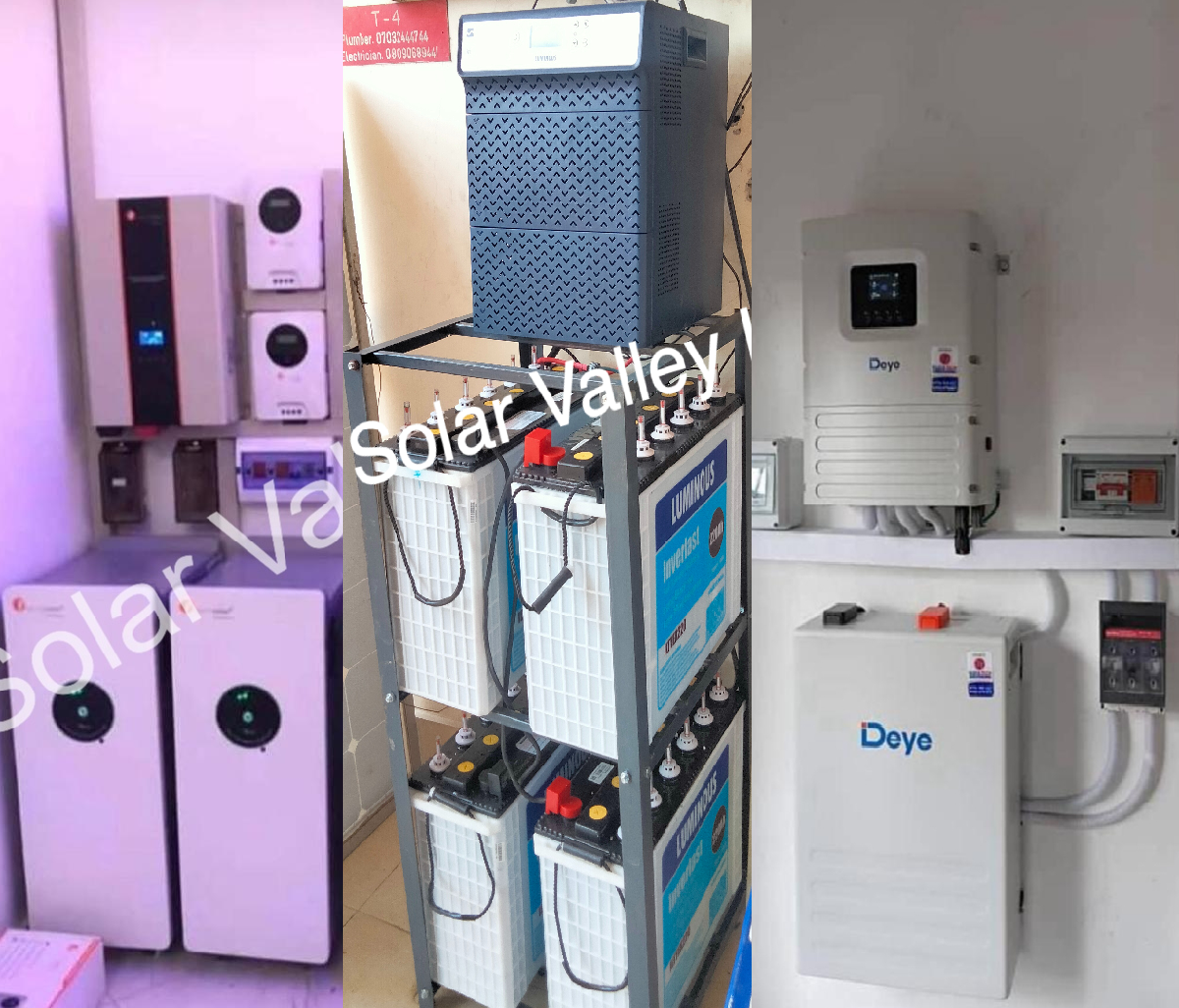
Felicity vs Luminous vs Deye: The Ultimate Comparison For Nigerian Solar Buyers
If you have been following Nigeria's solar industry, you would know that it has changed drastically over the last few years. The solar energy mark...
.png?alt=media&token=1c41250f-028b-4faa-84d3-6a3f77b1d837)
How to Fix Lithium Battery Communication Error Between BMS & Inverter (Fault 61, F58, Error 67, Warning 20)
When a solar system is working properly, the lithium battery's battery management system (BMS) and inverter work together like a coordinated team,...