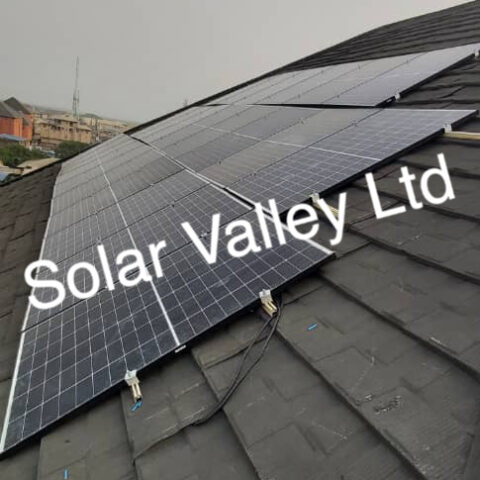
Why Bigger Solar Panels Aren't Always Better: Why 550W Became the Industry Sweet Spot

In this guide, we will be helping you to understand everything about solar panel sizing and why always going for the biggest size of solar panels for your installation might work against you.
We decided to write this article because it is usual for customers and prospective solar users to ask for the largest size of solar panels. It is true that due to economies of scale, a larger solar panel will have a relatively lower cost-per-watt advantage over smaller solar panels.
This can also reduce the effective number of units that will be required, which not only saves cost, especially for large solar arrays, but also is best where there is limited space for mounting the panels.
We will therefore discuss the advantages of larger-sized solar panels, such as the 550W and the 600W+ mega-panels (620W, 650W, 675W, 680W, 700W, 710W, and even 730W), and when it is best to use them.
Then we will also look at their hidden disadvantages and how they can limit the efficiency of your solar system. Lastly, we will compare the 550W solar panel specifically and explain why most solar installers prefer this particular size as the ultimate sweet spot.
The Shift From 250W-350W Panels To Large-Sized Panels
If you have been in the solar industry over the last decade, you have witnessed a massive shift in standard panel capacities. We moved quickly from the regular 250W, 300W, and 330W modules up to higher-voltage 450W panels. Now, 550W sizes and above dominate the market, even with massive 700W+ options readily available.
Currently, the 550W solar panel is the most sought-after by installers because they have the perfect balance of a bigger size and voltage that will satisfy the sweet spot for the operating PV voltages of most modern hybrid inverters, as well as the max PV watt input for both the inverter and user.
But before we go deeper into why the 550W solar panel is the most wanted size for most users, let us see the advantages and disadvantages of these large panel sizes
Advantages of Bigger-Sized Solar Panels
- Lower Cost Per Watt: The bigger the size of a solar panel, the relatively cheaper the cost per watt becomes. So, while the 550W solar panel itself is also a large panel, bigger panels will also provide better advantages in this regard.
- Best for Uniform limited space: Larger solar panels most of the time have a relatively better watt-to-size ratio compared to smaller solar panels like the 350W. This makes them preferred in situations where there is limited space, such as on carports, roofs, etc.
- Higher Voltages: Many of these large-sized panels have higher voltages compared to their 350w predecessors. Hence, with the right model, fewer units can easily be strung up in series to satisfy the operating voltage requirement of high frequency hybrid inverters.
- Theft Deterrence: In areas where the security of installed solar panels is not guaranteed, such as on low-roof structures like shops, a large panel is less appealing to thieves just because of its sheer size and weight. While a 350W panel can fit into many SUVs from the trunk, 550W panels and above require large vans for transporting them, and they are not even easy to handle.
- Access To Better Technology & Efficiency: Tier-1 solar panel manufacturers mostly focus on large-sized panels for large scale projects. Because these manufacturers are the leaders in the industry dedicated to improving solar panel efficiency and longevity, it follows that it is much easier to get the most advanced and efficient solar panels (like bifacials, N-type, etc) in larger sizes like the 450W and 550W sizes and above than in smaller-sized ones like the 350W and below.
- Installation Perks: Because large solar panels can produce more power with fewer units than smaller-sized ones, this can lead to less cabling and mounting accessories, and, in some cases, lower installation costs in labour.
Disadvantages Of Large-Sized Solar Panels
- More difficult to handle: Large-sized solar panels are more difficult to handle because of their sheer size and weight. Imagine carrying or hauling a 7-by-4-foot-long panel that creates a strong wind drag and weighs about 35kg on a roof.
- Weight on Roof & Structures: Large-sized panels are much heavier, and this causes extra weight on the roof. Hence, they cannot be installed on a weak roof and structure. Bifacial solar panels, which are usually found in large sizes, are also heavier than monofacial panels of the same size because of their dual-glass nature.
- Cost: Large-sized solar panels cost more per unit and might not be suitable for a budget-conscious user trying to start small and scale up later.
- Increased Handling Cost: The sheer size and weight of large solar panels increase their handling and installation costs. Higher effort and care are taken in hauling these panels up onto the roofs of buildings, which adds to the cost of installation. The cost of transporting them is also higher because they can only fit inside large vans and vehicles.
- Scalability: It is easier to scale up a solar array with smaller units of panel sizes. This is not only good for tight budgeting, but it is also good when trying to efficiently utilize the most of the PV input capability of a solar system (inverter or solar charge controller).
- Application: Large solar panels with higher voltages are not suitable for small applications involving PWM solar charge controllers. If you use them together, you only waste a lot of solar energy and risk damaging the controller itself. They work best with MPPT controllers.
Voltage (VOC) Rating: Why Bigger Solar Panel Sizes Aren't Always Better
Going for the absolute largest panel on the market can completely ruin your system configuration if you aren't careful. A massive, high-voltage panel can easily cause you to max out your inverter’s maximum allowable PV input voltage before you even come close to utilizing its wattage capacity.
Most people just look at the size/wattage of a solar panel and do not pay attention to the specifications. Rather than just looking for the biggest solar panel, other information, like the VOC, can also affect judgment.
The VOC dilemma: Consider a panel like the Exulted Eagles 460W, which carries an open-circuit voltage VOC of 65.71V. If you connect just 7 of these panels in series, your total string voltage reaches 459.97V. If you want to use this with a standard 6.2kva hybrid inverter with a maximum PV limit of 500V (and a recommended safe operating ceiling of 450V), you cannot add an 8th panel.
Those 7 panels only give you 3,220W of solar power, while your inverter can allow 6000W. Hence, you are left stranded at nearly half capacity because your voltage hit the ceiling first.
Let's look at another scenario involving a customer who calculates their household load and targets a 2,500W solar array. Seeking the "best and biggest," the customer insists on using the mega-sized Jinko 710W panels for the installation. These massive modules measure roughly 7.82 feet (2384 mm) in length by 4.27 feet (1303 mm) in width, with a VOC of 48.73V.
To meet their power needs, 4 of these panels would generate 2,840W, which is plenty of power. However, 4 panels connected in series will only yield a total string voltage of around 195V.
Many high-voltage hybrid inverters require a minimum startup voltage or have an optimal MPPT "sweet spot," which can range from 250 to 350V. Because 195V is too low for the inverter to run efficiently, the customer is forced to buy extra, unneeded panels just to push the string voltage up into the inverter's working range. Hence, the customer ends up wasting money on excess capacity they didn't want.
Why 550W Solar Panels Became The Go-To For Installers
With these dilemmas in balancing inverter voltage requirement with the user's solar watts requirement at the least cost, the 550W solar panel became the most preferred and sought-after panel size. This is because it has a perfect balance of watt size and voltage that can be strung up to fit most inverters and user requirements.
Although the 550W panel is also a large solar panel, its physical size is not as massive as the likes of the 650W and above, hence, it is easier to handle during carriage and installation among the league of other large-sized solar panels
With a voltage of about 50V, 8 of 550W solar panels can be connected in series to produce a massive 4,400W of energy input available for usage, while keeping the VOC below 400V. If the client's needs 2,500W of solar array, 5 of these panels can produce 2,750W at a VOC of 50V. This is also a perfect blend of cost, energy, and inverter requirements.
Summary
While looking for the best solar panel to buy, do not focus entirely on the size of the panel and its relative cost. Take a moment to go through other specifications, like the VOC and the data sheet, and ask questions about how it will work with your proposed solar system.
Though large sized and mega sized solar panels like the 650 to 710 watts panels undeniably have their best use, especially for large scale applications, 550W panels became popular and earned their reputation for the sweet spot for modern solar energy installations because it perfectly blend its specifications (physical size, watt, VOC, etc) with the inverter's PV rating and also with the budgets of real-world users.
Related Articles
Can I Use Solar Panels & Inverter Without a Battery? Complete Guide to Battery-Free Solar Systems
For many years, the answer to this question was simple: No. If you wanted to run a solar power system, you needed three key components working togethe...
%20Needed%20To%20Charge%20A%20Solar%20Installation%20(15kw%20Lithium%20Battery).png?alt=media&token=25b6e705-1e18-469e-b5a6-de6c79c9660e)
How Many 550W Solar Panels Do I Need To Charge My 15kwh Lithium Battery - Step By Step Calculation
A large lithium battery bank is only as effective as the solar panel system charging it. One of the biggest mistakes homeowners and installers make wh...
Causes Of Solar Panel Fires, Battery Explosions & Burning Inverters - Prevention & Safety Guide
There are cases of explosions and fire outbreaks due to solar power installations. Despite the exponentially number of solar installations (about 0.2 ...