Can I Use Solar Panels & Inverter Without a Battery? Complete Guide to Battery-Free Solar Systems
For many years, the answer to this question was simple: No. If you wanted to run a solar power system, you needed three key components working together:
- Solar panels to generate electricity.
- Batteries to store the electricity.
- An inverter to convert the stored DC power into usable AC power for homes and businesses.
In the early days of residential and commercial solar installations, batteries were not optional. Most conventional inverters, like the transformer-based, were designed to work only when connected to the correct configuration of a battery bank. Without batteries providing the required stable voltage, the inverter simply would not start or function correctly.
The compulsory battery storage systems made going solar more expensive than what many people could afford.
With the advancement in solar technology, some modern inverters can now work directly from solar panels without requiring batteries at all. They convert the solar energy gotten from the panels in the form of DC to AC, and feed it directly to power the home.
So, while you can use solar panels and an inverter without a battery. The success of this type of system depends on the inverter and the application.
In this guide, we will detail all of them and help you to find out if installing a solar energy system - solar panels and inverters, without batteries, is suitable for you.
How Solar Systems Worked Before Battery-Free Inverters
To understand today's innovations, it is better to first understand how traditional solar systems worked.
A solar panel produces direct current (DC) electricity. However, most appliances, electronics, and electrical equipment use alternating current (AC).
This is where the inverter comes in. Traditional inverters were designed to draw power from batteries rather than directly from solar panels. These batteries also ensured that the voltage was stable and stored excess solar energy for later user use when the sun is not available or when surge currents exceed solar input during startup of some appliances
Without batteries, the inverter had no reliable source of electricity and therefore could not function properly. This setup became the standard architecture for off-grid solar systems worldwide. Although it was effective, it came with some disadvantages:
- High battery costs: In reality, for many users, batteries are the most expensive component of the entire solar installation.
- Regular maintenance requirements.
- Limited battery lifespan.
- Controversial environmental concerns about battery production (mining and factory production) and disposal.
The Rise of Hybrid and Battery-Less Solar Inverters
With technological advancement, manufacturers have developed a new generation of solar inverters that can work directly from solar panels without using batteries as an intermediary.
These systems are usually found in high-frequency or high-voltage transformerless hybrid inverters that use sophisticated technologies like in-built Maximum Power Point Tracking (MPPT) solar charge controllers, advanced voltage regulation, smart load management, and high-speed electronic switching
The batteryless inverters also allowed users to choose various solar modes based on priority, such as solar first, solar then grid, solar then battery, etc.
These new types of inverters have made installing solar energy more appealing to many more homeowners and businesses looking for lower-cost solutions.
Can I Use Solar Panels and Inverters Without Batteries?
Yes. You can use solar panels and some types of inverters without batteries, as long as the inverter is designed for battery-less operation.
There is no energy storage in this arrangement. Solar panels generate electricity in DC form. The inverter converts the DC power into AC power, and appliances consume the electricity immediately as it is produced.
The major drawback of this system is that it stops supplying power as soon as sunlight disappears, unless another source, such as grid power, is available.
Why Would I Choose a Solar System Without Batteries?
Many homeowners and businesses deliberately request for inverters that can work without batteries or choose battery-less solar systems because of these advantages.
1. Lower Initial Cost
Batteries are usually the most expensive component of a solar installation, and can account for almost half of the cost in a solar quote. Using an inverter that can work without batteries and taking away the cost of batteries greatly reduces the upfront cost and can allow users to buy batteries at a later time while using the system.
2. Reduced Maintenance
Using solar panels and inverters without batteries removes the cost of battery maintenance, like adding distilled water in tubular batteries. There is also no need for battery monitoring. It also eliminates the cost of future battery replacement. Batteries degrade over time, and even modern lithium batteries have these risk factors; even when well maintained, they will eventually lose capacity over time and need replacement
3. Environmental Benefits
Solar energy is often promoted as environmentally friendly, but batteries have their own environmental carbon footprint. Battery manufacturing requires mining raw materials from the ground, like lithium, cobalt, nickel, and lead, and processing materials in factories.
The process of mining these minerals pollutes and degrades the environment. The processing of these raw materials into usable batteries also consumes energy and creates further pollution.
At the end of their lifespan, batteries are not easily discardable. They can pollute water sources if they leach into underground channels in a landfill. They also create fire risks, and sorting and recycling them also come with their own cost.
Although solar panels themselves also have environmental impacts during manufacturing and eventual disposal, removing the inverter batteries reduces the total environmental hazards of the entire system.
4. Lower Fire Risk
While modern batteries are generally safe, energy storage systems have higher fire risks if they are not properly installed, maintained, or if they are defective from the manufacturer. Choosing a battery-less solar system means that one major source of solar fire risk is removed.
5. Simpler Installation
This is because battery-free solar systems have less connections, installation space, fewer protective devices like breakers, and shorter installation time, which translates to lower installation cost.
Understanding Grid-Tied Inverters Vs Inverters Capable Of Working With Or Without Batteries
One of the most common battery-free solar solutions today is the grid-tied solar system.
A grid-tied inverter connects solar panels to the utility grid. It powers the home with solar energy and exports excess energy to the grid if possible. When solar energy is not available, the grid supplies electricity to the home. In essence, the grid is the energy backup.
The biggest drawback of the grid-tied system is that most of them automatically shut down during a power outage, even when the sun is shining during the day, and the panels are working perfectly.
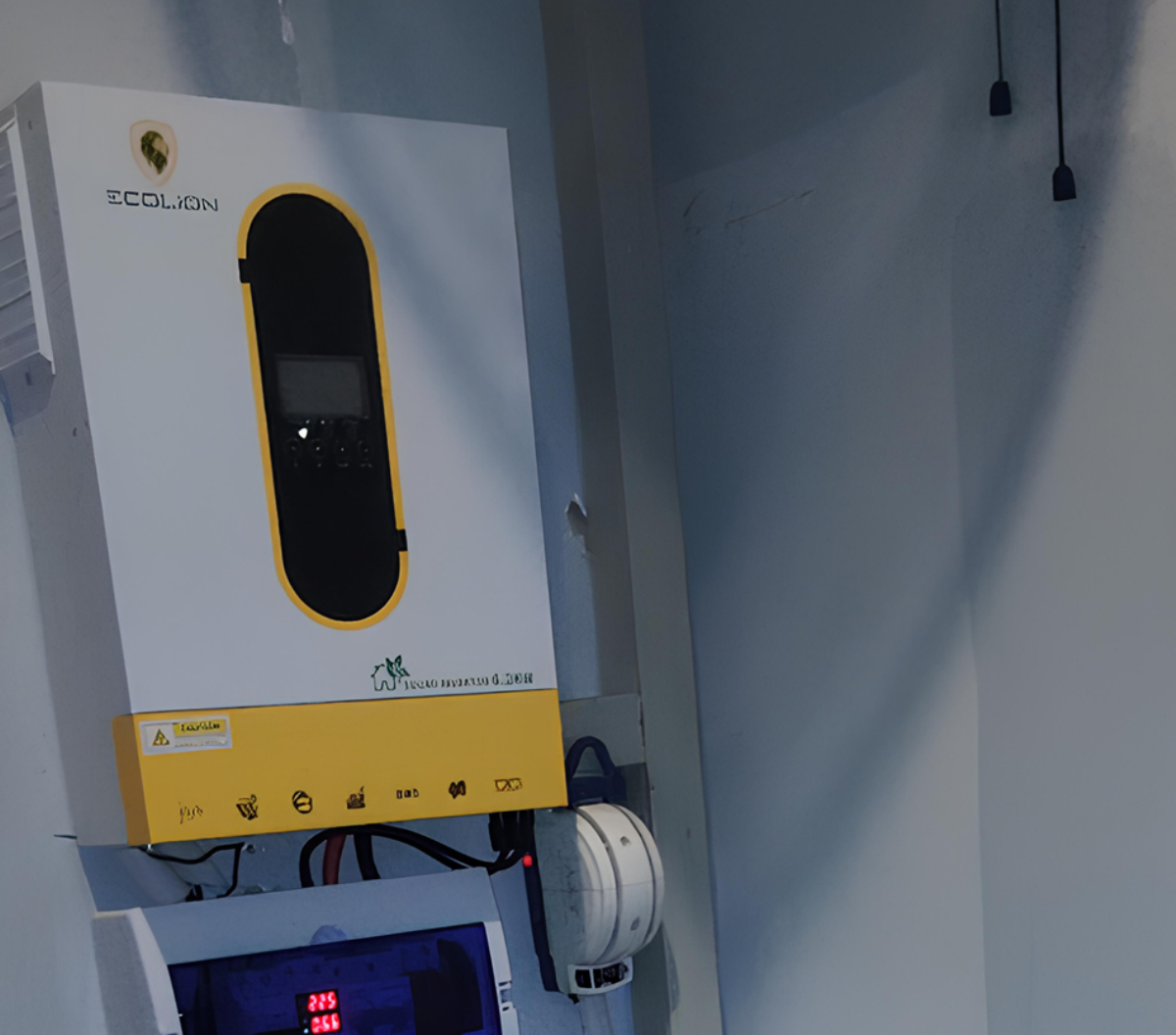
Meanwhile, high-voltage or high-frequency hybrid inverters that can work with or without batteries, also work with or without grid power availability. Some models, like the 6.2kVA and 11kVA Ecolion inverters, can also export excess solar energy to the grid.
Who Should Consider a Battery-Free Solar System?
A battery-less solar system can be suitable for you if you:
- Have reliable utility power.
- Want to reduce electricity bills.
- Operate mostly during daytime hours, like shops, offices, schools, etc.
- Have a limited budget.
- Want a simple solar installation.
- Prefer lower maintenance requirements.
- Are concerned about battery risks and environmental impacts.
But if you live in areas where grid power is not reliable, and you want uninterrupted power for your equipment, then a solar system with an inverter that gives you the option to work with or without batteries is the best
Final Verdict
Yes, you can use solar panels and an inverter without a battery if the inverter is designed for battery-less operation.
For many homeowners and businesses, this type of simple system reduces costs, maintenance, and environmental impact.
However, it is important to understand the trade-off: without batteries, solar energy can only be used when it is being generated, unless the system is connected to the utility grid.
Before making your choice, carefully evaluate your energy usage patterns, local grid reliability, budget, and long-term goals. In many cases, a battery-free solar system may provide all the benefits you need, while in others, battery storage remains an essential part of achieving reliable and uninterrupted power.
Related Articles
%20Needed%20To%20Charge%20A%20Solar%20Installation%20(15kw%20Lithium%20Battery).png?alt=media&token=25b6e705-1e18-469e-b5a6-de6c79c9660e)
How Many 550W Solar Panels Do I Need To Charge My 15kwh Lithium Battery - Step By Step Calculation
A large lithium battery bank is only as effective as the solar panel system charging it. One of the biggest mistakes homeowners and installers make wh...
Causes Of Solar Panel Fires, Battery Explosions & Burning Inverters - Prevention & Safety Guide
There are cases of explosions and fire outbreaks due to solar power installations. Despite the exponentially number of solar installations (about 0.2 ...
Maxeon, Aiko, LONGi, Leads Top 10 Best Solar Panel Brand
Choosing the best solar panel brand is more than comparing watt size or prices. A high-quality solar panel should produce a considerable amount of out...