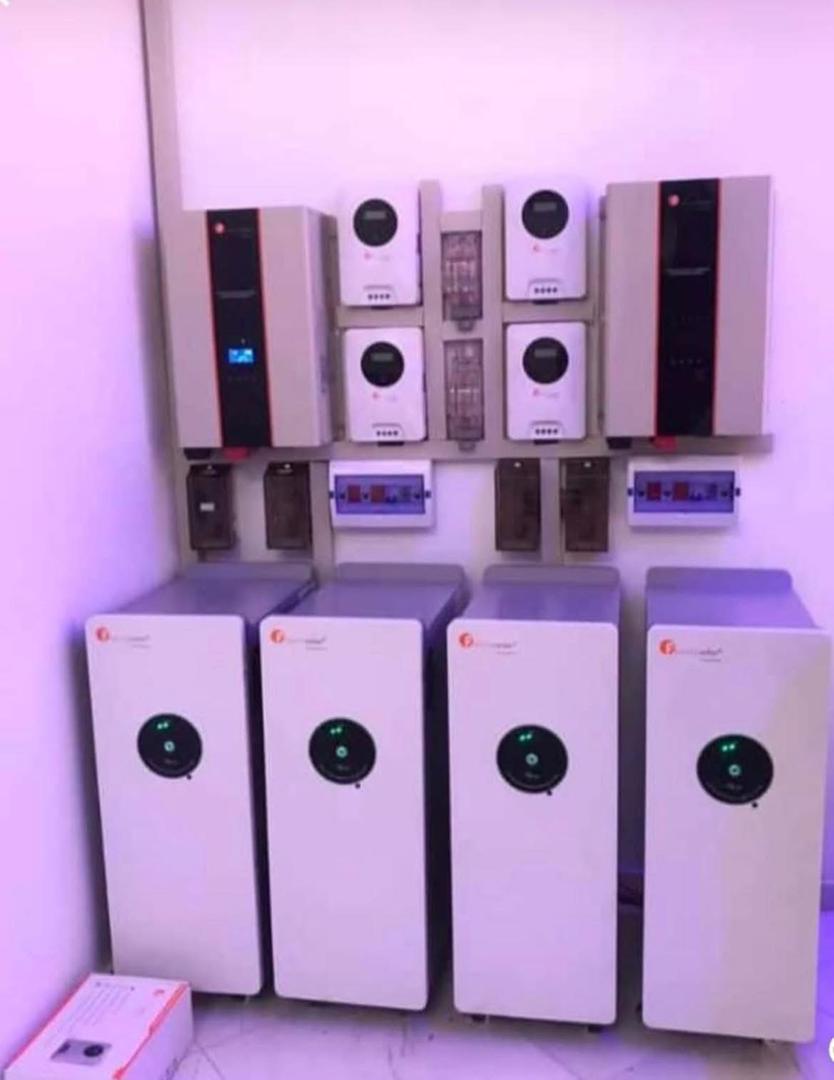
Why Your Lithium Battery Drains Fast & Won't Last Its Long Lifespan
You bought that costly lithium battery with 6000 cycles and a 5 to 10 years warranty, with the dealer's assurance that it will last up to 16 years even if you drain the battery every day, as translated from its 6-8k number of cycles. Also, you went for it after you were told that it had a higher energy density and was better than tubular batteries. However, after the installation, you became disappointed because the lithium battery was not living up to your expectations - it drains out fast and seems to be getting worse as the months go by.
In this article, we will tell you why your Lithium iron phosphate (LiFePO4) batteries does not last longer, dying only after a few hours after the sun goes down during daily usage, and also why they might not last long in years and fail far below the advertised lifespan.
From our experience and observation, lithium batteries fail mostly due to environmental factors, as well as installation and configuration errors. In this guide, we will be categorizing these failures under two broad groups:
1. Lithium battery draining fast daily (hours of runtime).
2. Lithium battery dying prematurely (lifespan in years).
Part 1: Why Your Lithium Battery Drains Fast Daily (Hours of Run Time)
Here, we look at why lithium inverter batteries do not last long in hours during daily usage in the absence of sunlight.
1. Undersized Battery Capacity
This is when the battery drains fast, simply because of the load it is carrying. Here, the battery is working normally and lasts as long as it is supposed to, but the user simply does not understand that the appliances connected to the inverter are not drawing energy from an infinite source.
This happens during load sizing when the installer did not give an accurate estimate of the duration a given battery bank will last for the appliances the user wants it to carry. That user later becomes dissatisfied and thinks something is wrong with the battery.
This also occurs because many people think lithium batteries have an incredible amount of energy capacity in them and do not understand the power capacity of what kilowatts (kW) mean, and will want to connect heavy appliances because they are "going lithium".
For example, a15kWh lithium battery carrying 3 inverter ACs and a fridge/freezer will last for about 4 to 6 hours, while the same battery, if it is to power 5 ceiling fans and the same fridge/freezer, will last much longer, about 12 to 18 hours.
2. Mismatched State Of Charge
In the absence of a Battery Management System (BMS) communication cable installed, the inverter is left to predict the State of Charge (SOC) of the lithium battery while performing its charging and discharging operations. While these battery parameters can be inputed into the settings of the inverter, a slight difference results in a bigger difference in the battery's SOC.
Unlike tubular batteries, whose voltage declines as the battery is steadily drained, making it possible to better predict the battery level or SOC using the voltage readings, lithium batteries have a flat discharge voltage curve. A 48V lithium battery, for example, stays at 51.2V to 52V for almost 80% of its battery capacity, then the voltage rapidly drops at the very bottom level of the battery before it shuts down.
If the installer did not use a BMS cable and did not properly input the correct battery settings, the inverter might think the battery is full, while the battery is still at 80% to 90%+. Hence, the user is losing an additional 10% to 20% battery capacity, in addition to the battery shutdown voltage or DOD, which is usually an additional 10% to 20%. A whopping 3,000w to 6,000w out of the 15,000w capacity of a 15kw lithium battery.
3. Chronically Undercharged Batteries
This occurs when the lithium battery does not attain a full charge before it is drained. This is prevalent in areas of poor power supply from the grid, which is then aggravated by an undersized solar panel array. This makes the battery habitually be below 100% before the sun goes down, hence, it will not be able to take the user through the night.
Solar panels will not be sufficient to charge a lithium battery when the installer fails in the solar sizing by not taking factors such as the battery capacity, daytime loads, type, quality, and size of solar panels, roof inclination, etc, into consideration. We discussed more about this in this guide: How To Calculate Number Of Solar Panels (550w) Needed To Charge A Solar Installation (15kw Lithium Battery).
Aside from undersized solar arrays, if the panels are mounted on a very steep roof, they will not get sufficient direct sunlight for peak charging, and that will result in perpetually undercharged batteries.
4. Low-Quality Lithium Battery Brands
Low-quality lithiums as well as fake brands will surely not give you what you expected because of the quality of the battery cells themselves.
This factor also covers fraudulent practices where a smaller-sized lithium battery is repackaged and rebranded as a larger-sized lithium battery. For example, a 12.5kw lithium battery repackaged as a 15kw. Or a 15kw battery sold as a 17kw, 20kw, or even 25kw lithium battery.
A second classic sign that you must have bought a low-quality lithium battery, aside from it draining quickly, is that it excessively heats up during the normal charging and discharging process.
Once you notice that, immediately stop using the system. Switch it off and turn off all breakers, and quickly call a qualified technician to take it out due to the increased risk of fire hazard.
Part 2: Why Your Lithium Battery Will Die Early (Lifespan in Years)
While the first part focuses on what makes the battery drain faster than expected during normal usage, this part focuses on the factors that will make your lithium battery's cells die prematurely, making it unable to last the duration of its advertised lifespan and cycle use in years. This is where a lithium battery that is supposed to last from 10 to 16 years and above, as advertised, begins to lose its capacity to hold its rated charge after only a few years of usage.
1. Heat
Heat is the number one and silent killer of lithium batteries, and many people do not know this. In fact, from my analysis, many people in hot regions like Nigeria will be dismayed because their lithium battery will not last up to the advertised number of years solely because of this.
Many lithium battery brands have a recommended temperature range in which the battery will perform best, and this usually falls to a maximum of 25°C. When extreme temperatures occur, such as a weather forecast that warned of extreme heat of 40 °C some weeks ago, lithium batteries undergo increased internal stress, which permanently degrades the battery cells.
While this might not be noticeable immediately, depending on the severity of the heat, it gradually degrades the cells and results in a permanent loss of total storage capacity over time.
When lithium batteries are installed in non-ventilated spaces and window-closed rooms, the temperature of such a room gets really hot, especially during hot weather, and this irreversibly reduces both the performance and lifespan of the battery.
Excessive heat can also result from having the battery in an area exposed to direct sunlight.
Extreme cold is also bad for these batteries because it slows down their chemical process and can make it appear weak when it's healthy. In extreme cases, it can also permanently damage the cells.
Do you know that a lithium battery rated for 10 years or 6000 cycles might end up lasting only 3 to 4 years if it is always working at hot room temperatures like 40°C. This is because the room's hot air will not speedily absorb the heat from the battery, making it to overheat further.
2. Very Fast Charging & Discharging Cycles
While lithium batteries support fast charging, always charging them at the maximum speed heats up the cells and makes them degrade faster. The same applies when discharging them. Every battery brand has its recommended charging and discharge current set by the manufacturers in order to get the maximum number of cycles from the battery.
That is why many small lithium battery applications, like the all-in-one solar generators, do not last for years before they start to fold up. This is because while the solar generator has an impressive inverter and output, it draws that output from a small battery size (usually 1kw-2kw). These small lithium batteries are meant to power light loads. Using it to carry heavy appliances like an air conditioner or a fridge/freezer, together with other home appliances, only kills the battery faster.
Overcharging the batteries is also not good for lithium batteries. Although they come with their own BMS, such continuous practices accelerates its wear and might result in early failures.
3. Overdischarging Beyond Recommended DOD
Depth of Discharge refers to the maximum level a battery can be drained in each cycle in order to ensure its longevity. A cycle occurs when you discharge a battery completely and recharge it to full. It mustn't happen at once, and various levels of DOD and recharging add up over time to complete one cycle of use.
Although lithium batteries can withstand deep discharge, going beyond 90-95% of the battery capacity significantly shortens their overall lifespan. The best DOD to ensure you get the maximum lifespan from a lithium battery is 80%. Draining the battery to zero and going further to leave it uncharged for days also severely damages the lithium-ion cells.
4. Low Quality and Fake Lithium Batteries
No matter how you try to play safe, if you purchase a substandard or fake lithium battery, it is bound to fail prematurely, both in daily usage and in lifespan. Lithium batteries from low-quality brands usually have low-grade cells that die faster, false capacity claims, and a poor BMS that fails prematurely.
5. Poor Battery Management System
The BMS is the brainbox of the lithium battery system, and it controls charging, discharging, temperature sensing, cell balancing, etc. You can then see that if this BMS fails, the battery cannot control and protect itself against these. This, itself, can destroy even a good quality battery and pose a serious fire risk.
How To Ensure Your Lithium Batteries Last As Long As Advertised
Having discussed the various risk factors that can make your lithium battery die fast and not live up to its advertised lifespan, we will outline the precautionary measures users should take to ensure they get the best from their power bank.
- Keep Temperatures Low: Ensure proper ventilation and avoid direct sunlight.
- Avoid Deep Discharges: Try not to drain below 20% regularly (80% DOD).
- Use Quality solar charge controllers and Inverters
- Only buy good quality brands from trusted sellers and installers
- Ensure BMS is integrated and proper charging settings inputed.
- Avoid constant overloading, fast charging, and high discharging.
- Size your battery bank and solar panel array correctly.
- Store properly, and if it will not be used for a long time, store it partially charged.
- Monitor Battery Health: Watch for unusual heating, swelling, or sudden voltage drops.
Related Articles
.png?alt=media&token=1c41250f-028b-4faa-84d3-6a3f77b1d837)
How to Fix Lithium Battery Communication Error Between BMS & Inverter (Fault 61, F58, Error 67, Warning 20)
When a solar system is working properly, the lithium battery's battery management system (BMS) and inverter work together like a coordinated team,...
Causes Of Solar Panel Fires, Battery Explosions & Burning Inverters - Prevention & Safety Guide
There are cases of explosions and fire outbreaks due to solar power installations. Despite the exponentially number of solar installations (about 0.2 ...
Debate Between Tubular Battery (Wet Cell) Vs Lithium Battery: Which Is Better & Lasts Longer?
Choosing between a tubular (wet cell) non-free maintenance battery and a lithium battery depends on several factors. Both types of batteries are stron...