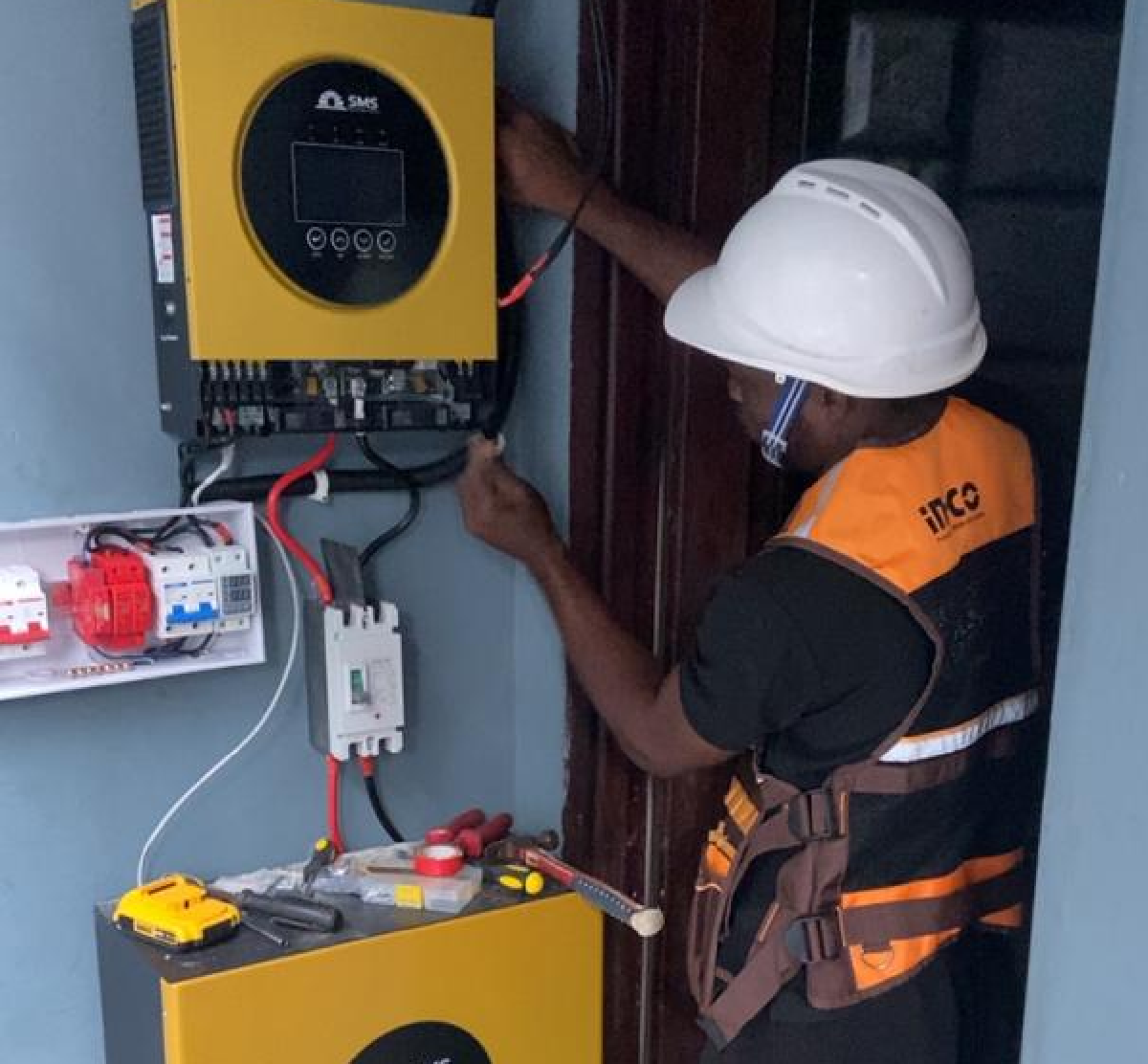
Solar Installation Jobs: Learning These Solar Skills & Training Might Earn You These Pay Grades

The ever-growing popularity of renewable energy and, most importantly, solar energy systems and installations has led to a surge in skill acquisition and career paths in line with solar energy production, sales, and installation. According to the joint data published by the International Renewable Energy Agency (IRENA) and the International Labour Organization (ILO) in 2025, renewable energy jobs, which comprises majorly of solar energy, is responsible for about 16.6 million jobs worldwide.
For people looking to pick a vocation in solar and are willing to undergo solar training towards becoming highly skilled engineers and technicians, this boom represents a highly valuable, globally liquid skillset.
Whether you are looking to secure a specialized corporate role, work internationally, or build an independent renewable engineering business, solar energy literacy is an open door to diverse and major income streams.
We will be looking at the various careers and jobs that people interested in learning solar energy can be employed in, as well as the income ranges for these jobs in different regions.
The core career paths in solar energy rely on a combination of technical engineering, installations, and sales.
1. Solar Installers (Solar Technicians & Engineers)
These are the execution roles when it comes to solar careers. They are the people who do the actual solar installations. They are the engineers and technicians who mount the solar panels on the roof, do the cabling, string up the system, set up the inverters and batteries.
They are the installers that carryout the plans as seen in the quote, which was prepared by the lead engineer or design specialist after consultation with the client.
Some of the core skills and competencies required for this role include mastering electrical protocols, knowledge of mounting and stringing up solar panels, DC/AC wiring configurations, setting up and configuring inverters and batteries, routing conduit, general safety protocols, etc.
2. System Engineer & Designer
This job is for the specialist whose job is to optimally maximize solar savings against client loads. Their roles include liaising with the client and assessing energy requirements, determining optimum solar requirements, assessing customer premises and roof, specifying the best system design and solar configuration that will work best with the client's conditions, setting out the most suitable program settings for the inverter, setting out other system configurations, etc.
Example: While a usual solar installer can easily state the size of the inverter for a client's load, for example, 10kva, the system designer will not only recommend the size of the inverter but also the best inverter to use. Whether it's an inverter with dual output (main and secondary output) should be used, where non-essential loads like the ACs are wired to the secondary output and a specific battery cutoff level is set for it, so that those non-essential items automatically cut off and don't totally drain the battery.
The system designer can also determine how best to string the solar panels and inverters for maximum output and cost savings. The specialist also knows exactly what type of solar panel to use depending on the circumstance.
The system engineer can almost precisely calculate the backup hours and load assessment towards recommending the best solar system size and configuration with the least price tag. A system engineer can recommend different sizes of components, and not just follow the industry norm.
For example, the specialist can recommend a larger panel array and an inverter with a higher input PV amperage rating with a smaller battery size for a daytime business, or recommend better antishading panels like Aiko and Longi instead of Jinko, where solar panels might be prone to random obstructions.
In summary, the system design engineer, as the name implies, is the person who designs and drafts the system and the solar components that the installer will set up.
While this role can be done by a single person, in large solar firms and corporations, this job can be divided amongst Solar Design Engineer, PV Project Engineer, and Storage Integration Specialist.
Some of the core skills and competencies required for this role include problem-solving skills, advanced knowledge of battery chemistry and electrical knowledge, general knowledge of products, hybrid inverter programming, configuring profiles, etc.
3. Repair Technician
These are the inverter and battery technicians who can troubleshoot, repair, or rectify damaged or malfunctioning items. These are the people who work on your inverter when it goes bad due to a surge, or the specialist who tests the gravity of your tubular battery when you complain that it does not last long anymore.
A solar repair technician must have good knowledge and experience to excel in this field. A good knowledge of electrical and inverter parts is also required.
Both the repair technicians, installers, and system engineers can be self-employed, working on a contractual basis, or working under a firm.
4. Solar Sales Personnel Or Marketer
This job is open for individuals to occupy the role of marketing solar energy to individual prospects and business organizations for residential solar and commercial solar installations.
The solar sales executive works to bring in new clients to the solar company. The person occupying this role should be skilled in marketing and also have a good understanding of how solar works and the basic system sizes.
They should also be able to answer basic questions that can arise during the marketing process, while technical ones can be forwarded to superiors.
While other solar jobs might have a standard fixed or contractual pay, a solar marketer's pay is usually a combination of a base amount plus commission on product sales or client installations.
5. Customer Service & Relations Officer
This job is for people who will manage existing clients of the solar company. They function like the customer support staff in an organization, and just like specialized organizations, they should be grounded in basic to intermediary knowledge of how solar works and common troubleshooting, because they will, many times, be contacted by existing users when there is an issue. They should also be competent in customer management.
8. Solar Equipment Seller / Distributor
These are the people who operate shops that sell solar products and other solar appliances like inverters, batteries, solar panels, street lights, solar freezers, etc. They can be found in the retail or wholesale segment can be found in major markets like Alaba International and Computer Village in Nigeria.
While the majority of their income is from sales of these solar components, they can also have or contract with private installers to perform installation jobs for their customers on request.
9. Solar Business Owner / Chief Operating Officer (COO)
Individuals can become entrepreneurs and start their own solar company or become a Chief Operating Officer for a solar company. These self-employed or high-ranking officers must have technical knowledge, entrepreneurial ambitions, and in-depth knowledge of the technicalities in solar energy systems.
10. In-House Manufacturing Jobs
These are job openings for core engineers, specialists, and AI experts that are needed in the actual manufacturing process of solar equipments. They are the highly trained and skilled workers who are actively involved from the product conception and innovation to design, testing, and actual production in factories.
They are found in core solar energy production factories like Jinko, Luminous, Victron Energy, etc. AI engineers and other software specialists also have roles in solar energy manufacturing companies with the invention of AI inverters with net-metering capabilities, and other integrations.
11. Solar Trainer
As demand for solar professionals grows, so does the need for qualified trainers who will teach new sets of specialists also grow. These solar trainers can offer solar installation programmes, workshops, and classrooms.
They can be found in technical colleges, vocational schools, private training centers, and solar companies. They can also work as private solar energy content creators on popular platforms like YouTube, where they teach installation techniques, system design, electrical safety, industry best practices, as well as other tips and guides.
12. Others
While the 11 job roles listed above are specialized career paths in the solar industry, solar energy companies also create miscellaneous job openings, like office and administrative executives, financial executives, etc.
Estimated Global Solar Income Ranges Around The World
The figures below are estimated annual earnings in the solar energy industry from regions around the world. The actual income (salary, wages, commissions, bonuses, other earnings) will vary depending on the worker's experience, certifications, employer, location, and project size.
| Job Role | United States | Canada | UK | Australia | Middle East | Nigeria |
| Solar Installer / Engineer | US$45,000–75,000 | CA$45,000-75,000 | £28,000-45,000 | AU$70,000- 100,000 | US$25,000-60,000 | ₦2.4M-₦7M |
| Solar Technician / Repairer | US$50,000–100,000 | CA$50,000-95,000 | £30,000-60,000 | AU$75,000- 120,000 | US$30,000-80,000 | ₦3M-₦10M |
| Solar Design Engineer | US$85,000–140,000+ | CA$80,000-130,000 | £50,000-90,000 | AU$100,000-150,000 | US$60,000-140,000 | ₦7M-₦20M |
| Solar Sales Marketer | Salary + commission (Top earners often exceed US$150,000) | Similar | Similar | Similar | Similar | ₦3M–₦15M+ |
| Solar Business Owner | Income depends on company size, projects completed, and market demand | Varies | Varies | Varies | Varies | Highly variable |
Note that in Nigeria and many developing countries, experienced solar installers often earn additional income through equipment sales, maintenance, consulting services, and referrals.
Is Solar Installation Worth Learning?
Solar installation is more than a trade; it is a gateway into one of the world's fastest-growing industries. Whether your goal is to secure a stable job, earn a higher income, work internationally, or build your own renewable energy company, solar skills provide a strong foundation.
Unlike many careers that are threatened by AI and automation, solar jobs, especially when it comes to core installations, use technical expertise, problem-solving, and hands-on experience that require core human effort and will remain in high demand.
For entrepreneurs, solar installation knowledge also provides the confidence to start an installation business, become a seller or distributor, or expand into energy consulting and maintenance services.
Where Can Solar Professionals Work?
Some of the industries skilled solar job seekers can work in include:
- Residential solar installation companies
- Commercial and industrial solar firms
- Engineering and construction companies
- Renewable energy developers
- Utility companies
- Government energy agencies
- Manufacturing companies
- Equipment distributors
- Research institutions
- International development organizations
- Independent consulting businesses
- Freelancers
Future Solar Jobs to Watch
With the technological advancement in solar equipment and systems, exciting new career opportunities are springing up and will continue to do so well into the far future, taking solar career paths beyond traditional installation work.
Emerging roles include:
- Battery Energy Storage Specialists
- EV Charger Installation Experts
- Smart Home Energy Integrators
- Solar + AI Monitoring Specialists
- Microgrid Designers
- Agrivoltaics Specialists
- Floating Solar Engineers
- Solar Data Analysts
- Hydrogen and Renewable Energy Consultants
- Solar Recycling and Sustainability Experts
Summary
Wherever you are, whether you're based in the United States, Canada, Europe, the Middle East, Australia, Nigeria, or elsewhere, learning solar installation skills can open doors to employment, entrepreneurship, and long-term financial growth and independence.
As renewable energy adoption continues to accelerate, those who develop their expertise today will be well-positioned to take advantage of one of the world's most promising industries. For anyone considering a career or business in clean energy, there has never been a better time to enter the solar sector.
Related Articles
What To Look Out For In A Credible Solar Quote / Estimate
A Solar Quote Is More Than Just a PriceShopping for a solar energy system is fundamentally different from buying standard household appliances. When y...
Can I Use Solar Panels & Inverter Without a Battery? Complete Guide to Battery-Free Solar Systems
For many years, the answer to this question was simple: No. If you wanted to run a solar power system, you needed three key components working togethe...
%20Solar%20Installation%20Quote%20In%20Nigeria.jpg?alt=media&token=538ac766-d105-4f6d-8fe5-eaee67ada305)
Full Cost Breakdown of a 6.2kVA (6kva) Solar Installation Quote In Nigeria
In this guide, we will give the total cost estimate of a 6.2kVA solar system, which will include the components that you should expect (inverter, batt...