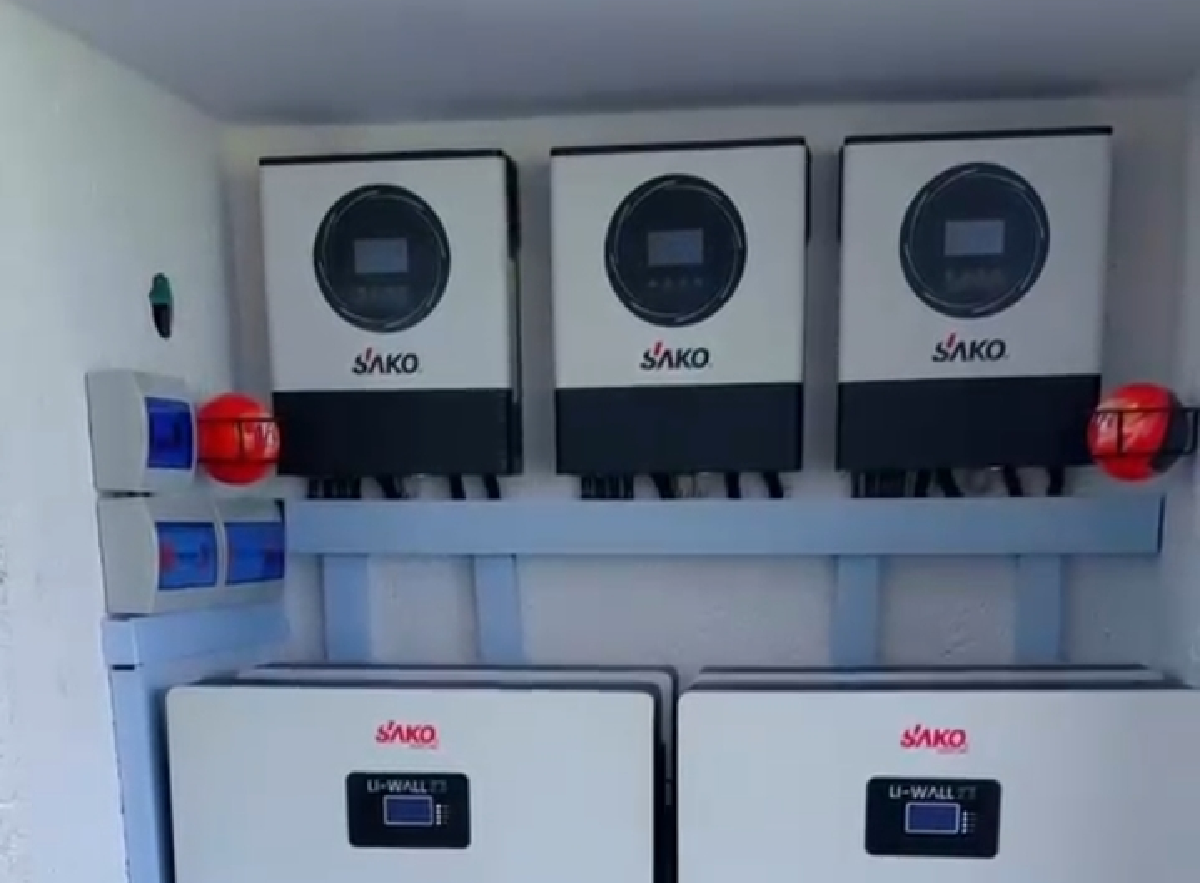
Ultimate Guide to Inverter Sizing: Load Calculation, Watts to kVA, Surge Rating & Appliance Power Usage
Just like knowing the size of your trousers before making the final purchase at a clothing store, estimating your total load and getting the correct size of inverter is also as important and should be the first step towards the installation of any solar energy system.
Though the inverter sizing can be done by the solar expert you are enquiring from, it is also great if you have this knowledge yourself, as it would better guide your decision-making, especially when you want to buy your inverter yourself through online stores or plan a do-it-yourself (DIY) installation.
In calculating the size of the inverter that you should use for your homes or offices, the first step is getting the energy demands of the various appliances that the intended inverter will carry, as well as the number of those appliances. You should also take cognizance of the start-up power for inductive loads.
In this guide, we will teach you how to accurately get the size of the inverter to buy, measured in KVA, that will sufficiently carry your energy demands, and also show you the various energy consumption in watts of common home and office appliances.
Inverter Sizing
As stated earlier, one of the major and first steps in preparing a solar quote is load estimation and inverter sizing. The size of the inverter determines its rated continuous output or power, which determines what the inverter and the solar system at large can effectively power, irrespective of the battery size or solar array.
Therefore, a massive 45kWh lithium battery bank, which roughly translates to huge 45,000 watts of energy storage, installed with a 12,000W worth of solar array and a 10kVA inverter, cannot carry more than 8,000 watts of load.
This 8000W of continuous load is the recommended maximum output that the 10kVA inverter is rated for. So, if the user intended to have the inverter carry more loads, because of his excess storage and solar capacity, he simply cannot do so and will have to either get a single bigger inverter or add another separate inverter to the old one and parallel them if possible.
If you overload an inverter by having it carry more than its recommended output capacity during installation, the inverter will not last as long as it is supposed to. If you are also in the habit of manually connecting excess load to the inverter for a quick getaway after the installers have done their job, you are scheduling an appointment with the inverter repair shop.
Just like when discussing with your doctor, you just have to be honest about what your inverter will carry, while estimating for future expansions if necessary. Luckily, most quality inverters come with overload protections that can trigger the inverter off, but this is not failproof, and the inverter can still get damaged from cumulative thermal stress or outright failure.
Now, having known the importance of inverter sizing, we move to the next phase, which is estimating the correct inverter KVA for you. And here, we must have the knowledge of the energy consumption of various household appliances.
Energy Consumption Of Common Appliances
You need to know the amount of power your appliances consume per hour. The addition determines the size of the inverter to buy or install. The type of appliances also determines the type of inverter to go for - whether transformer-based or hybrid transformerless.
The rate at which these appliances use energy is represented in Watts (W). If a TV is rated at 180W, that is its continuous electrical draw while turned on. Running it for exactly one hour equals 180 Watt-hours (Wh) of energy consumed from your battery system
Below is the list of common electrical appliances and their energy requirement per hour. You can also find the most commonly used ones on our solar calculator.
Important notes before the table:
- Running Watts is the normal operating power consumption.
- Startup power or Surge Watts is the temporary power needed when motors/compressors start. This usually occurs in inductive loads from appliances like ACs, pumps, refrigerators and freezers, compressors, photocopiers, and some commercial fans. These inductive loads can draw up to 2 to 5 times their actual normal power when they are first put on. These surge current typically lasts for a few seconds, then the appliance returns to normal consumption.
- In contrast, resistive appliances like an iron, a kettle, and heaters usually have no major startup surge.
- Modern inverter appliances usually have a lower startup surge.
- The actual power demand varies by brand, energy efficiency, voltage, and age. The energy rating of many appliances can be found on the body, usually at the back or side.
| Appliance | Typical Size / Capacity | Running Power (Watts) | Running Power (kW) | Startup / Surge Load (Watts) | Appliance Type | Recommended Inverter Consideration |
| LED Bulb | 5W–20W | 5–20W | 0.005–0.02kW | Same as running | Resistive | Minimal load |
| CFL Bulb | 15W–40W | 15–40W | 0.015–0.04kW | Same | Resistive | Minimal |
| Fluorescent Tube | 36W–58W | 36–58W | 0.036–0.058kW | 60–120W | Inductive | Small surge |
| Ceiling Fan | Standard | 45–90W | 0.045–0.09kW | 120–250W | Inductive | Allow startup margin |
| Standing Fan | Standard | 50–120W | 0.05–0.12kW | 150–300W | Inductive | Moderate surge |
| Exhaust Fan | Standard | 25–80W | 0.025–0.08kW | 80–200W | Inductive | Small surge |
| LED TV | 24"–65" | 30–180W | 0.03–0.18kW | Same | Electronic | Stable inverter output |
| Plasma TV | Large | 200–500W | 0.2–0.5kW | Same | Electronic | High continuous load |
| Decoder / Set-top Box | Standard | 10–35W | 0.01–0.035kW | Same | Electronic | Minimal |
| Home Theatre | Standard | 80–500W | 0.08–0.5kW | Same | Electronic | Depends on volume |
| Laptop | Standard | 40–120W | 0.04–0.12kW | Same | Electronic | Low load |
| Desktop Computer | Standard | 150–500W | 0.15–0.5kW | Same | Electronic | Continuous load |
| Gaming PC | High-end | 500–1200W | 0.5–1.2kW | 700–1500W | Electronic | Large inverter recommended |
| Computer Monitor | LED | 20–80W | 0.02–0.08kW | Same | Electronic | Low load |
| Wi-Fi Router | Standard | 5–25W | 0.005–0.025kW | Same | Electronic | Very low |
| Printer (Inkjet) | Standard | 20–100W | 0.02–0.1kW | 50–150W | Electronic | Small surge |
| Laser Printer | Standard | 300–1200W | 0.3–1.2kW | 500–1500W | Inductive/Heater | High peak load |
| Photocopier (Small) | Desktop | 700–1500W | 0.7–1.5kW | 1200–2500W | Inductive/Heater | Dedicated inverter margin |
| Photocopier (Medium Office) | Multi-function | 1500–3000W | 1.5–3kW | 2500–5000W | Inductive/Heater | Heavy-duty inverter |
| Photocopier (Industrial) | Large commercial | 3000–7000W | 3–7kW | 5000–10000W | Inductive/Heater | Industrial setup |
| Refrigerator (Small) | Single door | 100–250W | 0.1–0.25kW | 400–1200W | Compressor load | High startup surge |
| Refrigerator (Double Door) | Medium/Large | 200–500W | 0.2–0.5kW | 800–1800W | Compressor load | Surge-capable inverter |
| Deep Freezer | Medium | 250–700W | 0.25–0.7kW | 1000–2500W | Compressor load | Large surge |
| Microwave Oven | Standard | 800–1500W | 0.8–1.5kW | Slightly higher | Resistive | High running load |
| Electric Kettle | Standard | 1000–3000W | 1–3kW | Same | Resistive | Heavy battery drain |
| Electric Iron | Standard | 1000–2200W | 1–2.2kW | Same | Resistive | Heavy load |
| Toaster | Standard | 800–1500W | 0.8–1.5kW | Same | Resistive | Heavy load |
| Blender | Household | 300–1000W | 0.3–1kW | 800–2000W | Inductive | Short surge |
| Washing Machine | Semi-auto | 300–800W | 0.3–0.8kW | 1000–2500W | Motor load | Large surge |
| Washing Machine | Fully automatic | 500–2000W | 0.5–2kW | 1500–3500W | Motor/Heater | Heavy startup |
| Dishwasher | Standard | 1200–2400W | 1.2–2.4kW | 1500–3000W | Heater/Motor | Heavy load |
| Vacuum Cleaner | Standard | 600–2000W | 0.6–2kW | 1500–3000W | Motor load | Large surge |
| Hair Dryer | Standard | 800–2200W | 0.8–2.2kW | Same | Resistive | Heavy load |
| Water Heater | Instant | 3000–6000W | 3–6kW | Same | Resistive | Very high demand |
| Electric Cooker | Single plate | 1000–2000W | 1–2kW | Same | Resistive | Heavy load |
| Electric Oven | Standard | 2000–5000W | 2–5kW | Same | Resistive | Very heavy load |
| Air Fryer | Standard | 1200–2000W | 1.2–2kW | Same | Resistive | High continuous draw |
| Air Conditioner | 1 HP | 700–1200W | 0.7–1.2kW | 2000–4000W | Compressor load | Large startup surge |
| Air Conditioner | 1.5 HP | 1000–1800W | 1–1.8kW | 3000–5000W | Compressor load | Strong inverter needed |
| Air Conditioner | 2 HP | 1500–2500W | 1.5–2.5kW | 4500–7000W | Compressor load | Heavy-duty inverter |
| Inverter AC | 1–2 HP | 500–1800W | 0.5–1.8kW | 1200–3000W | Variable-speed compressor | Lower surge |
| Water Pump | 0.5 HP | 370–600W | 0.37–0.6kW | 1000–1800W | Motor load | High startup |
| Water Pump | 1 HP | 750–1200W | 0.75–1.2kW | 2000–3500W | Motor load | Heavy surge |
| Water Pump | 2 HP | 1500–2500W | 1.5–2.5kW | 4500–7000W | Motor load | Industrial-grade inverter |
| Sumo Pump | 1 HP | 750–1500W | 0.75–1.5kW | 2500–4000W | Heavy motor load | Large startup current |
| Borehole Pump | Deep well | 1000–3000W | 1–3kW | 3000–9000W | Heavy motor load | Oversized inverter required |
| Sewing Machine | Electric | 70–150W | 0.07–0.15kW | 150–300W | Motor load | Small surge |
| POS Machine | Standard | 10–30W | 0.01–0.03kW | Same | Electronic | Minimal |
| CCTV System | 4–16 Channels | 30–200W | 0.03–0.2kW | Same | Electronic | Low load |
| Server Rack | Small office | 300–2000W | 0.3–2kW | Slightly higher | Electronic | Continuous runtime important |
| Electric Drill | Standard | 500–1200W | 0.5–1.2kW | 1500–3000W | Motor load | Short surge |
| Air Compressor | Small | 1000–3000W | 1–3kW | 3000–9000W | Heavy inductive | Very high startup |
Non-Inverter Air Conditioners
| AC Type | Typical Running Power (Watts) | Running Power (kW) | Startup / Surge Load (Watts) |
| 1 HP Non-Inverter AC | 900–1300W | 0.9–1.3kW | 2500–4500W |
| 1.5 HP Non-Inverter AC | 1200–1900W | 1.2–1.9kW | 3500–6000W |
| 2 HP Non-Inverter AC | 1800–2800W | 1.8–2.8kW | 5000–8500W |
| 2.5 HP Non-Inverter AC | 2200–3800W | 2.2–3.8kW | 6500–11000W |
Inverter Air Conditioners
| AC Type | Average Running Power (Watts) | Running Power (kW) | Startup / Surge Load (Watts) |
| 1 HP Inverter AC | 500–1100W | 0.5–1.1kW | 1200–2200W |
| 1.5 HP Inverter AC | 700–1600W | 0.7–1.6kW | 1800–3000W |
| 2 HP Inverter AC | 1000–2200W | 1–2.2kW | 2500–4500W |
| 2.5 HP Inverter AC | 1400–3000W | 1.4–3kW | 3500–5500W |
Industrial Standing Fans (OX, ORL, etc.)
These large industrial iron-made fans draw far more power than regular plastic standing fans because of their larger motors and metal blades. These types of fans are usually found in shops, event centers, churches, mosques, and other religious centers, offices, and other spaces, etc.
| Fan Type | Blade Size | Running Power (Watts) | Running Power (kW) | Startup / Surge Load (Watts) |
| Industrial Standing Fan (Small) | 18"–20" | 120–220W | 0.12–0.22kW | 300–600W |
| OX Industrial Fan | 24" | 180–350W | 0.18–0.35kW | 500–900W |
| ORL Industrial Fan | 24"–26" | 200–400W | 0.2–0.4kW | 600–1000W |
| 2-Blade Industrial Fan | Large commercial | 250–500W | 0.25–0.5kW | 700–1500W |
| Factory Pedestal Fan | Heavy industrial | 400–750W | 0.4–0.75kW | 1200–2200W |
Knowing My Recommended Inverter KVA
With the information above, you find your appliance, how many of them that you have and want the inverter to carry, then multiply by its corresponding normal running power.
So if you have 3 ceiling fans, 10 bulbs, a television, and a double-door fridge in your apartment or flat. It will translate to 3x90 + 10x15 + 180 + 500. Simply put, the total energy consumption per hour can be put at 1,100W.
Next, look at appliances with inductive loads and locate only the one with the highest surge power. For most average homes with one or two inductive loads, a cost-efficient method is to subtract the running power from the surge power and add the difference to the total load gotten above.
In our example, the fridge is the only appliance with an inductive load. We subtract the normal running power of 500W from its surge power of 1,500W. The difference of 1,000W is added to the total load of 1,100W to arrive at a new 2,200W figure.
Aside from the buffer that we will still add as we progress, we chose to add only the difference for most household installations because most quality inverters have a surge rating of 1.5 to 3 times their normal output.
In homes with multiple and higher inductive loads, as well as commercial setups, it is best to add the full surge power from the highest inductive load, and not just the difference. This is due to unexpected real-life situations where multiple inductive loads might start at the same time, as well as makeup from multiple losses.
Now, inverters are rated in kVA, so we need to convert our 2,200w load to kVA (Kilo-Volt-Amperes). 1,000w makes a KW (kilowatt), but we won't just divide by 1,000. We must first adjust for a recommended power factor of 0.8 to account for power inefficiencies and electrical losses in normal usage.
2,200 Watts ÷ 0.8 Power Factor = 2,750 VA (Volt-Amperes). Converting this to Kilo-Volt-Amperes, we get 2,750 VA ÷ 1,000 = 2.75 kVA.
Next, we add a safety margin on the load for the inverter. This is usually 30%. Hence, our 2,750VA or 2.75kVA is marked up by 30% to get the final figure of 3,575VA, approximately 3,500VA.
Hence, the recommended inverter size for this installation is a 3,500VA or 3.5kVA inverter.
So, here you have it, and I hope you find this guide helpful. You can also check our article that compares the differences between a transformer-based inverter and a hybrid transformerless inverter to better help you know the type of inverter that will be most suitable for you. If you prefer, you can also watch it on our YouTube Channel.
Also, check our guide on calculating the number of solar panels that you will need for your solar installation.
Related Articles
About The 6.2kva (6kva) Hybrid Inverter: Cost, What It Can Carry, How Long It Will Last
With the introduction of the solar hybrid transformerless inverters, the 6.2kva or 6kva hybrid inverter, which usually comes in variants of 5kva, 5.5k...
Causes Of Solar Panel Fires, Battery Explosions & Burning Inverters - Prevention & Safety Guide
There are cases of explosions and fire outbreaks due to solar power installations. Despite the exponentially number of solar installations (about 0.2 ...
About The 3.5kva, 4kva & 6.2kva Solar System: Number Of Batteries, What It Can Carry & How Long It Will Last, Etc.
The 3.5kva and 4kva 48volts inverter and solar energy system was the popular demand for many looking for more power to carry their home and office app...