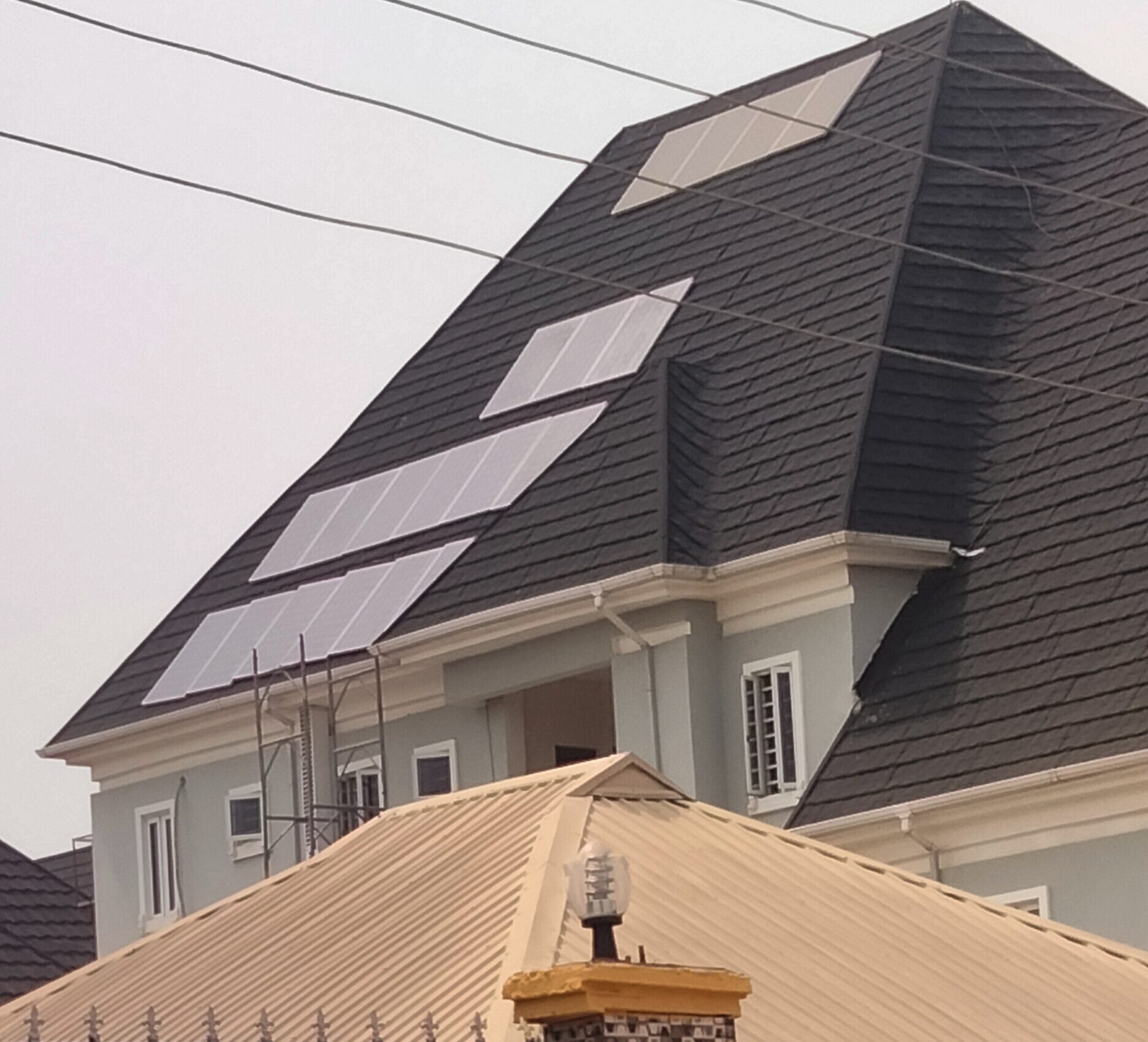
Is Your Steep Roof Pitch Killing Your Solar Panel Energy Output? Why Positioning, Tilt Angle & Direction Matters

Without beating about the bush, the answer is yes. A very steep roof inclination, such as the popular "send down the rain roofs," can reduce the energy output of solar panels mounted on them.
This is a common occurrence in solar panel installation from our many years of experience, and when we encounter such steep-angled roofs, we always inform the client beforehand about it, letting them know that the actual solar energy produced by the panels will definitely be lower than expected.
And the reason is because solar panels work best when they receive sunlight at a favourable angle; the best is around 10 to 15 degrees. When you install panels on a roof that is very sloppy, the panels will be positioned at an angle that is less effective for capturing the available sunlight most of the day.
This does not mean that every steep roof is unsuitable for solar panel installation. But the steeper the roof, the less effective the panels will become at getting direct sunlight and the more important the roof's direction and the position of the sun become.
The lack of this awareness makes uninformed homeowners who have spent huge money installing high-capacity panels on their roof and assuming that the hot Nigerian sun will give them the needed energy production become disappointed and resort to saying that "solar no dey work".
Solar Panels Need More Than Just "Hot Sun"
"Please come and check my solar system, even with the very hot sun my battery never gets full"!
One of the biggest misconceptions about solar power is that if there is good sunlight, the panel must be producing close to its maximum output.
Solar panels need direct sunlight, and the angle or tilt at which the sunlight hits the panel has a great effect on how effectively the panel can convert that sunlight into electricity. This factor affects all types and grades of solar panel, irrespective of their technology, grade or tier-one status.
When solar panels are mounted on a roof, they follow the roof's existing angle, and when the roof is very steep, the panels are effectively placed at an angle that is widely different and off from the angle at which the sun is positioned for much of the day. And this results in lower solar panel energy output.
This problem is very common in residential solar installations because it is cheaper and easier to simply mount the panels on the existing roof structure.
For example, supposing you are told that a 5kw solar array should give a certain amount of energy on an average sunny day. That estimate assumes that the solar panels will be mounted on a surface that provides favorable conditions.
But if the panels are now operating under reallife conditions that are not as good as those assumed in the original calculation, they will perform badly.
Hence, low solar output does not always mean that your solar panels or hybrid inverter is faulty, or that there is a missing or wrong connection somewhere. Sometimes, the problem is just the positioning and tilt angle of the panels.
How To Improve Solar Panel Efficiency On Very Steep Roofs
Asking a homeowner to tear down his roof and construct a solar-favourable one because the existing roof is very steep might not be practicable. Also, constructing solar ground-mount systems like canopies and carports comes with an additional cost and is also constrained by the availability of space.
If you must install your solar panels on a very steep roof pitch, you can apply one or more combinations of these to improve their performance.
1. Install solar panels on a reverse-tilt rack: Instead of mounting your panels on the traditional solar rack that is flat on the roof surface, a special tilted solar rack can be used. This reverse solar tilt rack, which is also called a counter rack, raises the lower end of the panels up against the roof slope. However, great care must be taken in doing this because of the increased risk of wind uplift uprooting the panels and structure off the roof. Also, the aesthetic design of the roof and building might be compromised.
2. Install on Better Roof Direction: Installing the panels on the side of the roof that faces the direction that receives strong sunlight during the most productive part of the day can improve the production of solar panels mounted on very steep roofs.
Therefore, installing solar panels does not mean only mounting them and wiring the connections. Determining the best solar orientation (tilt and direction) is very key in doing a quality job that shows experience.
Solar Panel Installation on Send-Down-the-Rain Roofs (Steep-Sloped Roofs)
In Nigeria, many modern houses have roofs with very steep slopes, some looking like Disney castles, which are collectively referred to as send-down-the-rain roofs. Although this type of roof has its unique advantages, such as quickly letting water rush down - making it less prone to leakages and reducing heat buildup from the very hot afternoon sun, when it comes to installing solar, their performance is greatly reduced because of their sharp tilt angle.
Aside from that, it is more risky installing solar panels on this type of roof due to the risk of falls. It also makes maintenance in the future more difficult and increases the overall installation cost.
Hence, the solution, aside from considering reverse tilt rack and optimising solar direction, is to install a ground-mount system such as ground solar stands and solar carports..
Summary: Don't Ignore Your Roof When Designing a Solar System
A steep roof does not automatically make a property unsuitable for solar, but it is also a mistake to assume that solar panels mounted on a very steep roof will perform as well as the same panel installed at a more favourable angle and orientation.
In our experience at Solar Valley Ltd, we have encountered many situations where customers focus only on the size of the solar panels, inverter and battery, but get surprised when we point out the consequences of their steep roof design.
You can buy the best solar panels in the world, install them with the most powerful inverter and large lithium battery, but if the panels are installed at a very poor angle that limits how much sunlight they can effectively capture, you may not get the energy production you were expecting. The sun may be shining brightly, but that does not mean your solar panels are getting all they need.
Before installing solar, ask your installer to assess the roof pitch, orientation, and sunlight exposure to determine how efficient the rooftop installation will be and whether any tilt modification or ground-mounts solar installation will be best.
Related Articles
Can I Use Solar Panels & Inverter Without a Battery? Complete Guide to Battery-Free Solar Systems
For many years, the answer to this question was simple: No. If you wanted to run a solar power system, you needed three key components working togethe...
%20Needed%20To%20Charge%20A%20Solar%20Installation%20(15kw%20Lithium%20Battery).png?alt=media&token=25b6e705-1e18-469e-b5a6-de6c79c9660e)
How Many 550W Solar Panels Do I Need To Charge My 15kwh Lithium Battery - Step By Step Calculation
A large lithium battery bank is only as effective as the solar panel system charging it. One of the biggest mistakes homeowners and installers make wh...
Causes Of Solar Panel Fires, Battery Explosions & Burning Inverters - Prevention & Safety Guide
There are cases of explosions and fire outbreaks due to solar power installations. Despite the exponentially number of solar installations (about 0.2 ...